

What the 2026 Federal Budget Could Mean for Perth Homeowners, Buyers and Investors
Negative gearing, capital gains tax and housing policy
The 2026 Federal Budget has put housing firmly back in the spotlight, with proposed changes that could reshape the way Australians buy, invest and think about property.
While much of the national conversation has focused on negative gearing and capital gains tax, the real question for Perth is more practical:
What does this mean for homeowners, first-home buyers, renters and investors in an already tight local market? The Noble Avenue Real Estate Team has unpacked it here.

The biggest change: negative gearing will shift toward new homes
From 1 July 2027, the Federal Government plans to limit negative gearing benefits to newly built properties. This means investors purchasing established homes after Budget night will no longer be able to offset rental losses against wage or business income in the same way they can now. Existing investment properties held before 7:30pm AEST on 12 May 2026 will be grandfathered under the current rules.
The 50% capital gains tax discount will also be replaced with cost-base indexation and a 30% minimum tax on net capital gains from 1 July 2027.
In simple terms, the Government wants tax incentives to encourage investors to help fund new housing supply, rather than compete with first-home buyers for existing homes.
For Perth, that sounds logical on paper, but the local market is not operating in ideal conditions.
Why Perth may feel the impact differently
Perth is still dealing with a supply problem. Population growth, limited rental availability, construction delays and rising building costs have all contributed to strong demand for established homes. NAB recently noted that Perth’s population rose 2.4% over FY2024–25, the highest growth rate of any capital city, while new housing supply continues to lag demand.
That means even if investor activity shifts toward new builds, supply will not appear overnight.
New apartments, townhouses and house-and-land packages take time to plan, approve, finance and build. In the meantime, established homes in well-located suburbs may continue to attract strong interest from buyers who want certainty, lifestyle and immediate availability.
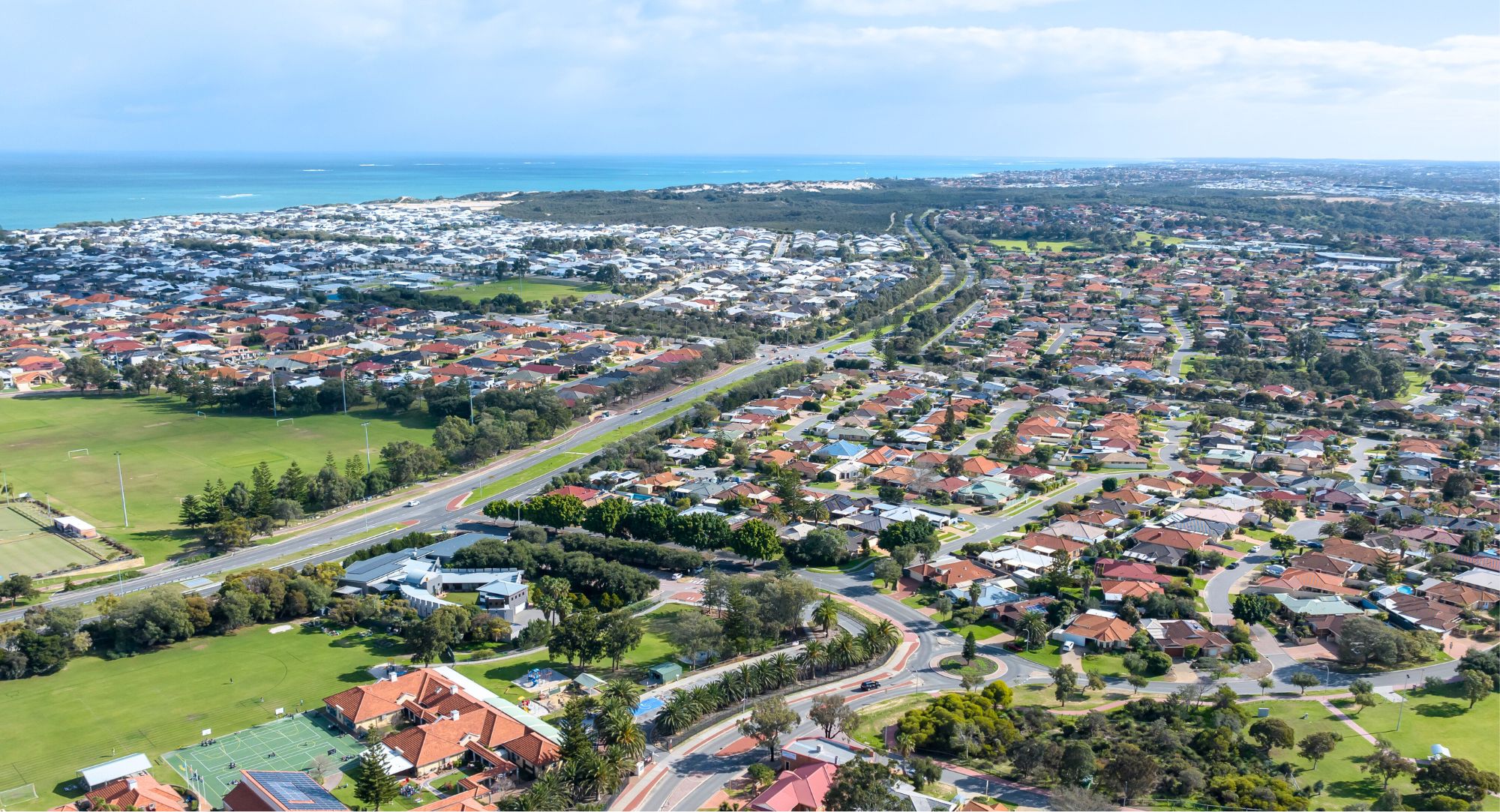
In Noble Avenue’s core northern coastal suburbs, the Budget changes may be felt differently from the broader national market. Established suburbs such as Hillarys, Sorrento, Karrinyup, Carine, Duncraig and Kallaroo are not just investment markets, they are lifestyle markets. Buyers are often drawn by schools, beaches, parks, shopping, larger blocks and the ability to move straight into an established community. While some investor demand may shift toward new builds, well-located established homes in these areas may continue to attract strong competition, particularly where rental demand and family buyer demand remain high.
What this could mean for first-home buyers
The intention of the reforms is to reduce investor competition in the established housing market, which may help some first-home buyers compete for villas, units, townhouses and entry-level homes.
The Federal Government has also expanded the 5% Deposit Scheme, with uncapped places, no income caps and higher property price caps, allowing more eligible buyers to purchase sooner with a smaller deposit.
However, in Perth, first-home buyers may still face strong competition because demand is not only coming from investors. Downsizers, interstate buyers, returning expats and local families are all active in the market.
So while the policy may help some buyers, it does not automatically make Perth property easier to secure.
What this could mean for renters
This is where the concern becomes more immediate.
Perth’s rental market remains tight, with REIWA reporting the vacancy rate fell to 2.0% in March 2026. REIWA also noted that WA relies heavily on investors to provide private rental supply.
If some investors pause, sell, or redirect their money away from established rental homes, the rental market could feel further pressure before new housing supply catches up.
For tenants, this could mean continued competition for quality rentals, particularly in established suburbs close to schools, beaches, transport and employment hubs.
What this could mean for existing homeowners
For homeowners, the reforms may create a more nuanced market.
Established homes in desirable Perth suburbs could remain highly sought-after because they offer something new builds often cannot: location, land size, lifestyle infrastructure and immediate occupancy.
However, investor appetite may become more selective. Buyers may place more value on properties with strong rental yield, low maintenance, development potential or long-term capital growth.
For homeowners thinking about selling, presentation, pricing strategy and buyer targeting will become even more important.
WA is also trying to increase supply
At a state level, WA’s 2026–27 Budget includes significant housing measures, including stamp duty relief for first-home buyers, expanded off-the-plan concessions, increased Keystart property price limits and investment in social and affordable housing.
These measures are designed to help more people buy, encourage downsizing, support apartment development and improve housing supply.
But again, the key issue is timing.
Policy can encourage supply, but Perth’s immediate challenge is that people need homes now.
The takeaway for Perth
The Federal Budget is designed to shift investor demand away from established homes and toward new housing supply.
But in Perth, the impact may be more complex.
A tight rental market, strong population growth and limited established stock mean any pause in investor confidence could have short-term consequences, especially for renters.
For buyers, the changes may create opportunities in some segments, but competition is unlikely to disappear.
For sellers, well-presented homes in lifestyle-driven suburbs may remain highly attractive, particularly where supply is limited.
The next 12 to 18 months will be important. Before making a decision, homeowners, buyers and investors should look beyond the headlines and consider how these changes apply to their property, suburb and long-term goals.
View the Federal Budget at budget.gov.au.
How can we help
You might also be interested in

Jul 22, 2026
What Perth's Proposed Subdivision Changes Could Mean for Your Block, and Whether You Can Subdivide Now
In July 2026, WA's Planning and Lands Minister John Carey announced the biggest proposed overhaul of the Residential Design Codes (the R-Codes) since they were introduced roughly three decades ago. Th
Jul 7, 2026
Buying or Selling Property in Perth? New ID Checks Are Now Law
As of 1 July 2026, every real estate agency in Australia has to run identity checks on buyers and sellers before a sale can go through. Not just Noble Avenue, every agency, everywhere in the country.