


What Perth's Proposed Subdivision Changes Could Mean for Your Block, and Whether You Can Subdivide Now
In July 2026, WA's Planning and Lands Minister John Carey announced the biggest proposed overhaul of the Residential Design Codes (the R-Codes) since they were introduced roughly three decades ago. The headline figure: the government estimates more than 50,000 existing properties across metropolitan Perth could become newly eligible for subdivision if the changes go ahead.
Here's what's actually being proposed, why our local area is squarely in the frame, what the realistic timeline looks like, and how to work out whether your own block would be affected.
The rule that could be changing
Most standard suburban blocks in Perth are coded R20. Right now, subdividing an R20 block requires two things: each new lot has to meet a minimum size, and the average size across the resulting lots has to reach 450sqm, which in practice means you generally need about 900sqm of land before subdivision is possible at all.
The proposed change would make 700sqm R20 blocks eligible to subdivide
That 200sqm difference matters here, since Carine and Karrinyup have already seen infill subdivisions on blocks in that size range, and it's the gap between a block being locked as a single dwelling forever and becoming a genuine two-lot opportunity.
Why this matters locally
R20 is the most common density code across metropolitan Perth, which is why the government's estimate runs into the tens of thousands of properties. But it's not evenly spread. The areas the government and industry bodies have flagged as most affected include the City of Stirling and City of Joondalup, alongside Wanneroo, Canning and Cockburn.
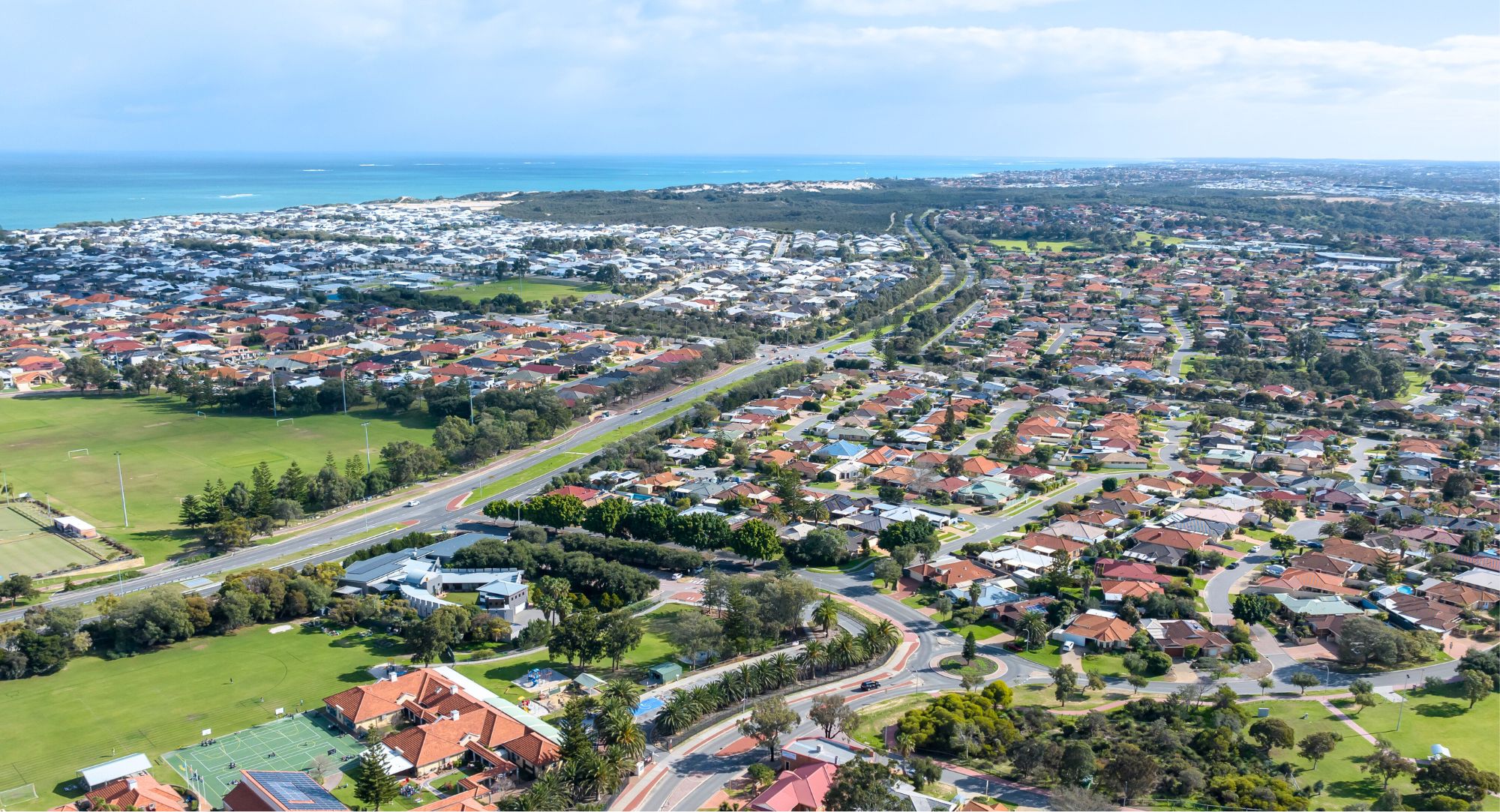
That's directly relevant to the suburbs we work in every day. Karrinyup and Carine sit within the City of Stirling, while Hillarys, Kallaroo, Sorrento, Mullaloo, Ocean Reef, Currambine, Burns Beach, Iluka, Kinross and Duncraig all fall within the City of Joondalup. Both councils are named among the areas expected to see the most impact if these changes proceed.
Much of this footprint was built out through the coastal expansion of the 1980s and 1990s, when suburbs like Currambine, Kinross and Iluka were still being developed, and older pockets of Karrinyup, Carine and Duncraig were already established. That mix of build eras is part of why the proposed change matters here: standard blocks from that period are exactly the profile the reform targets.
To be clear: this doesn't mean every property in these suburbs qualifies. Eligibility comes down to your specific block size, exact zoning, and whatever your local council's structure plan requires, not just the suburb you live in. If you're curious about your own property, your land size and R-code are available through your council's mapping portal or LandGate. The team at Noble Avenue Real Estate can also help you understand what this means for your block.
What else is in the reform package
Two other changes are bundled into the same reform:
- Simpler approvals for small projects. Things like single houses, renovations, patios and carports would no longer need planning approval at all, and standard single-house approval times would be cut from 60 days to 30.
- A restructured rulebook. The R-Codes would be split into three separate volumes (Single House, Grouped Dwelling, and Multiple Dwelling) to cut down on the cross-referencing that currently slows the system down.
So, can you subdivide now?
No. This is still a proposal, not law. Public consultation is expected to open later in 2026, and the government's own stated target for implementation is mid-2027. Consultation can and likely will reshape some of the detail before anything is finalised, and there's already public debate about the changes, including concerns raised by some in state parliament about tree canopy loss and liveability in suburbs that see rapid infill.
So there's no reason to rush a decision based on this announcement alone. What it does mean is that if you own a block that sits between 700sqm and 900sqm on R20-zoned land, it's worth keeping an eye on how the consultation process unfolds over the coming months, since it could genuinely change what your property is capable of.
What to do in the meantime
If you're weighing up your options, whether that's holding, selling, or exploring development potential down the track, understanding where your property actually sits against these proposed thresholds is a useful starting point. Reach out to our team at Noble Avenue Real Estate if you'd like a read on how your specific property and suburb fit into this picture as more detail becomes available.
Common questions about the proposed changes
Can I subdivide my block right now under these new rules? No. As of mid-2026, this is still a proposal. Nothing has changed yet. Public consultation is expected to open later in 2026, with the government targeting implementation from mid-2027, and the rules could still change during that process. The current 900sqm effective requirement for R20 blocks still applies today.
How do I find out my block's size and zoning? Your land size and R-code are available through your local council's mapping portal or through LandGate. Both are free to search using your property address.
What does R20 actually mean? It's a density code, shorthand for roughly 20 dwellings per hectare. It's the standard code applied to most typical suburban streets across Perth, including much of our local area.
How big does my block need to be to subdivide, and how is that changing? Under the current rules, R20 blocks generally need close to 900sqm of land, because subdivision requires meeting both a minimum lot size and a 450sqm average across the new lots. The proposed change removes the average requirement, which would drop the practical threshold to 700sqm for blocks that meet the minimum lot size.
Is my suburb likely to be affected? The local government areas flagged as most affected include the City of Stirling and City of Joondalup, along with Wanneroo, Canning and Cockburn. That covers our full service area: Karrinyup and Carine (City of Stirling), and Hillarys, Kallaroo, Sorrento, Mullaloo, Ocean Reef, Currambine, Burns Beach, Iluka, Kinross and Duncraig (City of Joondalup). Being in one of these areas doesn't guarantee your specific block qualifies, since that depends on your exact land size, zoning, and council requirements.
Will this increase my property's value? It's genuinely too early to say with certainty. Development potential is one factor that can influence value, but nothing is confirmed, and the detail could change through consultation. Any claims about guaranteed value increases at this stage should be treated with caution.
When will I actually know if my block qualifies? Once public consultation opens later in 2026, more detail will become available on exactly how the new rules would apply. Implementation isn't expected before mid-2027 at the earliest.
This article reflects the proposed reforms as announced in July 2026. Details are subject to change through the public consultation process, and nothing in this article should be taken as confirmation that any specific property is or will be eligible for subdivision.
You might also be interested in
Jul 7, 2026
Buying or Selling Property in Perth? New ID Checks Are Now Law
As of 1 July 2026, every real estate agency in Australia has to run identity checks on buyers and sellers before a sale can go through. Not just Noble Avenue, every agency, everywhere in the country.
May 22, 2026
What the 2026 Federal Budget Could Mean for Perth Homeowners, Buyers and Investors
The 2026 Federal Budget has put housing firmly back in the spotlight, with proposed changes that could reshape the way Australians buy, invest and think about property. While much of the national conv